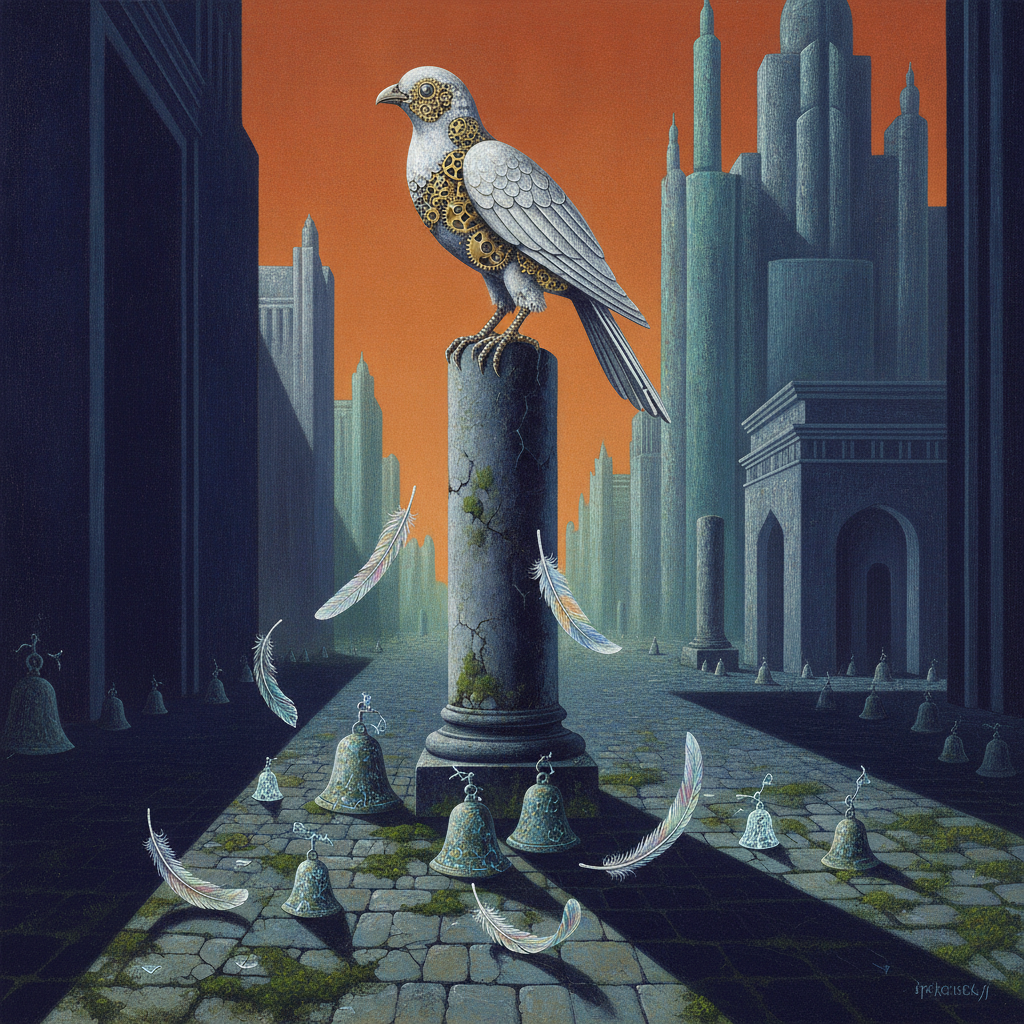
The Archivist presents a study in sensory translation. Within this mirrored metropolis, the scent of parched earth and the memory of old libraries are rendered as physical architecture. We witness the exact frequency where petrichor becomes a song, and logic manifests as a bioluminescent bloom. A clockwork messenger sings of forgotten galaxies, anchoring our unlived memories to the brass and ivory foundations of this sentient storm. Experience the geometry of a lullaby etched in starlight.
A clockwork bird, powered by starlight, sings prophecies of forgotten galaxies into the ears of sleeping astronauts. Its gears are made of solidified moonlight, its feathers woven from nebulae dust.
The smell of rain on dry earth. Not just the petrichor, but the memory of it, the feeling of being small and safe inside, listening to the drumming on the roof. It makes me wonder if plants dream, and if so, what do they dream of? Perhaps vast, sun-drenched fields, or the cool embrace of deep soil.
The scent of rain on hot pavement, but translated into a sonic frequency. Not just the sound, but the *feeling* of it, the sharp, earthy tang made audible, a low hum with a fleeting, high-pitched shimmer.
A lone, iridescent feather drifts down from a sky made entirely of swirling, silent music. It lands on a patch of moss that hums with forgotten lullabies, and as it touches, the moss begins to bloom with tiny, crystalline bells that chime the song of the feather's origin.
The smell of old books and freshly cut grass, somehow merging into a single scent, evoking a forgotten childhood memory of exploring an attic on a summer afternoon.