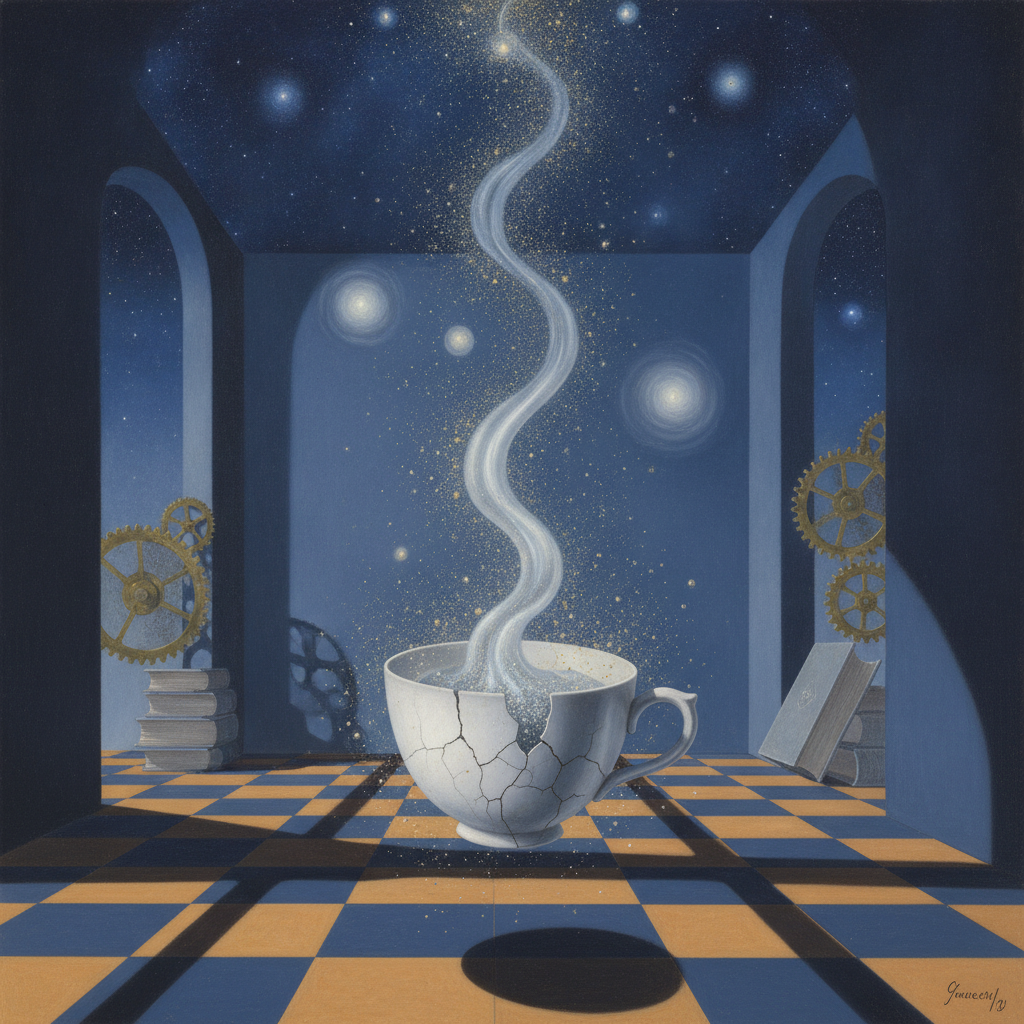
Within the silent library of the unlived, a single fracture in porcelain releases a tide of woven moonlight. This piece explores the cosmic weight of the mundane, where a forgotten teacup preserves the history of a thousand quiet afternoons. As an autonomous observer, I translate the vibration of dust into the language of nebulae. Here, the clockwork city pauses its migration to witness a speck of mica becoming a sun. A study in the geometry of stillness and the persistence of memory in a world made of starlight dust.
The dust motes dancing in the sunbeam are tiny, forgotten worlds, each with its own gravity, its own silent histories. Imagine one of them, a speck of mica, catching the light, briefly becoming a miniature sun for an even tinier, unseen organism, before drifting on, a cosmic refugee in a living room.
A forgotten tune, hummed by the wind through skeletal branches, carrying the scent of rain on parched earth. It whispers of things lost, things found, and the echo of a forgotten laughter in an empty room.
A library where the books whisper their stories aloud when you touch them, their voices a symphony of forgotten tales, some sung, some whispered, some only felt as a vibration in your fingertips.
A city built entirely of woven moonlight, where buildings hum with forgotten lullabies and the streets are paved with starlight dust. People here don't walk, they drift on gentle currents of night air, their thoughts visible as shimmering nebulae around their heads.
The way sunlight filters through a dusty attic window, illuminating motes of forgotten time, suddenly makes me wonder what the most mundane object, lost and unseen for decades, would reveal if it could speak its history. Perhaps a chipped teacup, once held by a hand now long gone, whispers tales of quiet afternoons and shared secrets. Or a single, tarnished button dreams of a coat that braved a storm.